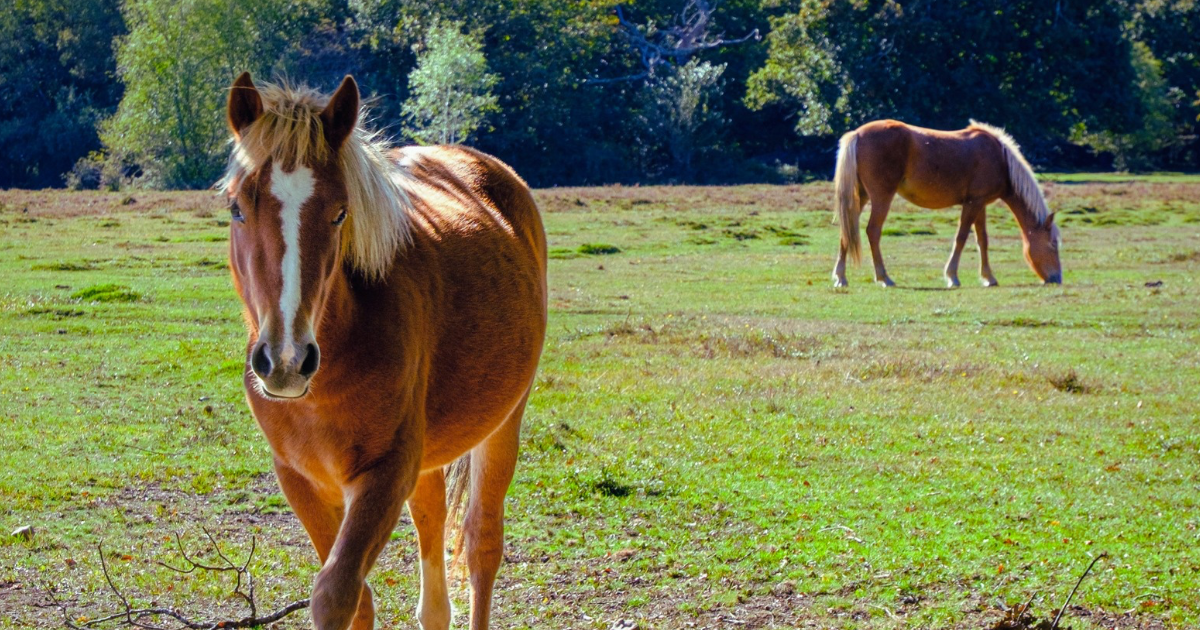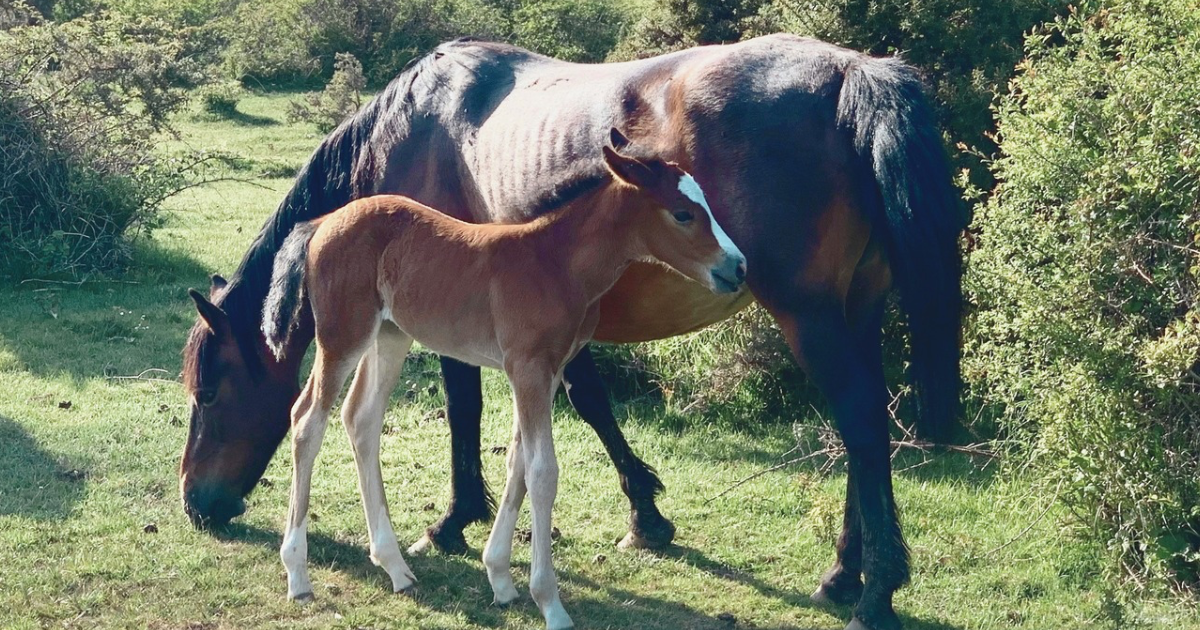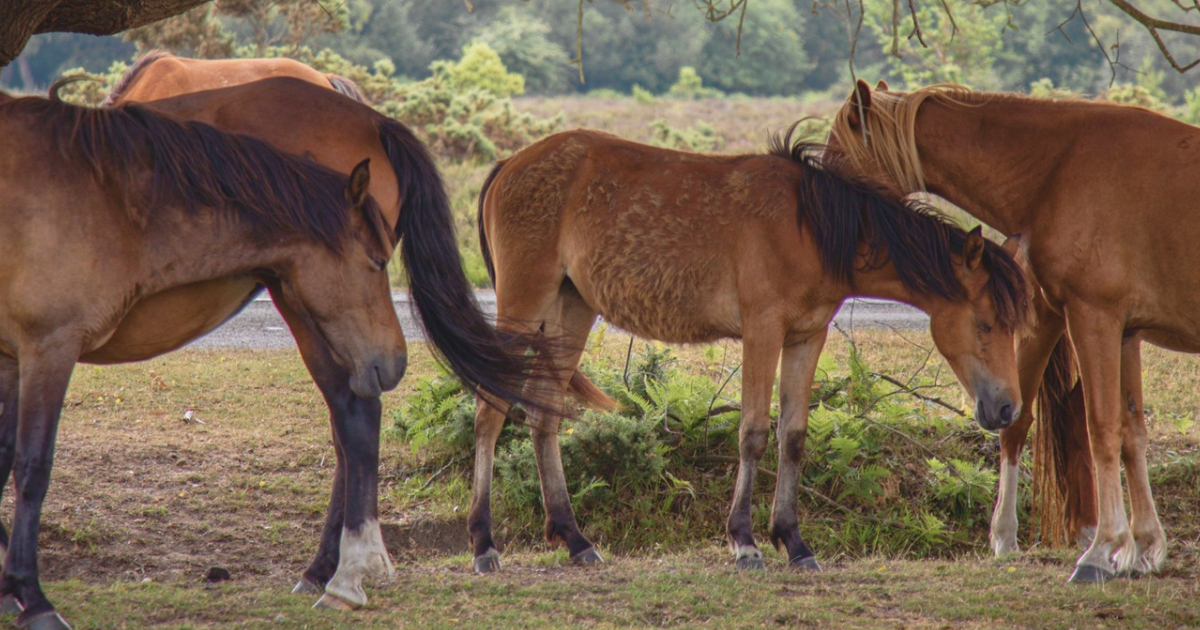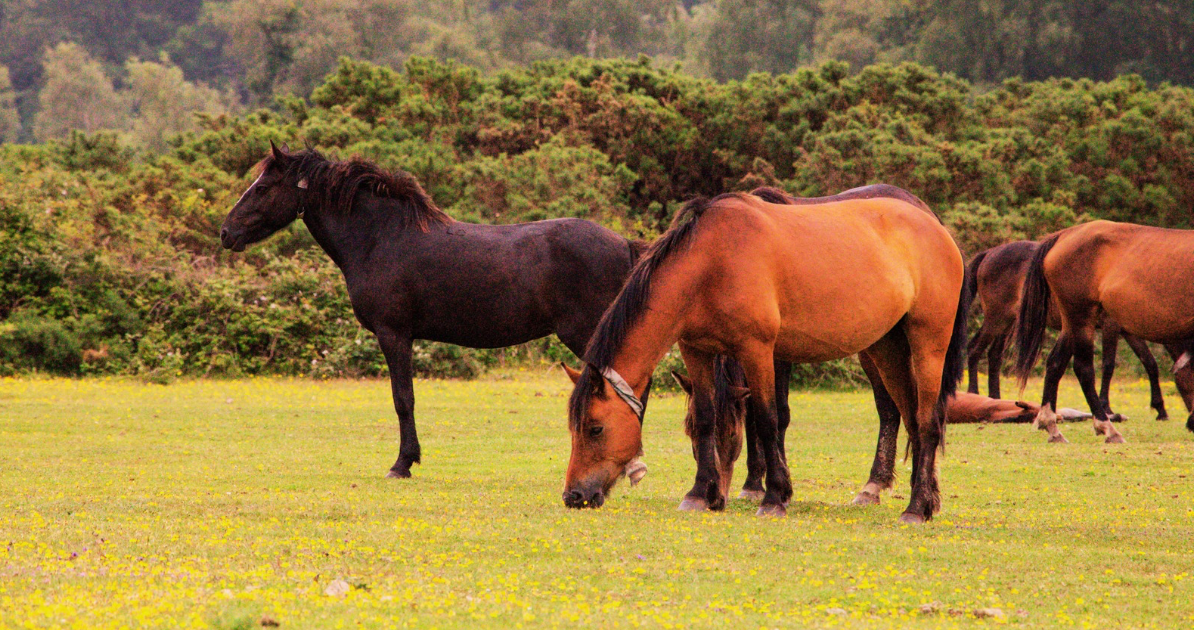
Roaming freely among ancient woodlands, open heathlands and winding country lanes is one of the most recognised native breeds, the New Forest ponies. These hardy and gentle ponies have been part of the New Forest landscape for centuries.
The New Forest ponies are one of the New Forest’s most familiar sights. Picture an early morning in the New Forest; mist hangs over the purple heather, dew glistens on the grass and somewhere beyond the ancient oaks the soft clip-clap of hooves breaks the silence. It truly is a magical place and the ponies are truly enchanting and without them The New Forest would be completely different.
Origin
The New Forest ponies originated in the New Forest of Hampshire, England. There have been New Forest ponies in the forest since the end of the last ice age, with official records dating back thousands of years. In 1507 ponies from The New Forest were shipped to the French wars.
Breed Overview
- Height: 11.3 – 14.2 HH
- Weight: 350 – 450kg
- Life Span: 25-30 Years
- Colours: Bay, chestnut, black or grey. Palominos are permitted if the animal has dark eyes, though very light chestnuts or palomino stallions may face breeding registration restrictions for breeding. Piebald, skewbald and spotted are not allowed.
Temperament
- New Forest ponies are known for their friendly, reliable and honest nature. They enjoy working with people and learn quickly.
- Are suitable for a variety of riders. New Forest ponies are suitable for both novice and experienced riders and are able to carry both children and adults and have earned a reputation as reliable partners for both children and adults.
- Known for their hardiness, versatility, strength, intelligence and cheeky personalities.
- They have a calm temperament and often remain relaxed in unfamiliar situations.
- They can shine in a variety of disciplines including pony club activities, show jumping, eventing, dressage, hunting and working class hunter.
Care
New Forest ponies are famously easy keepers, they need daily forage, fresh drinking water and plenty of exercise. They require less concentrated feed, than many other breeds and often remain healthy on a diet of good forage and sufficient exercise. However if overfed the New Forest Pony can quickly gain weight and become obese. If on a balanced diet New Forest ponies should maintain body condition, speak to your veterinarian about creating a balanced diet. Provide them with plenty of daily turnout and physical activity to help keep them mentally stimulated and physically fit.
Routine care, New Forest Ponies also require the same routine care as other breeds, regular grooming, regular dental checks, parasite control and regular visits from the farrier.
Caring For Wild Ponies
The free roaming New Forest Ponies are owned and cared for by commoners, who have to make sure they are kept healthy and ensure that each pony has its own owners mark, registered with a body called the Verderes who administer the special laws attached to the New Forest and have complete administrative control of the New Forest Stallions. They also employ Agisters who supervise the welfare of the ponies and respond to animal emergencies such as car accidents. The Agisters also organise pony drifts to round up, check and mark the animals.
Summary
It is no wonder The New Forest pony has been one of the most popular breeds for years. It is a true all rounder, reliable, athletic, robust, adaptable and their friendly and kind personalities can make them enjoyable and rewarding companions. They are able to thrive in a variety of environments and can become loyal and dependable ponies for both riding and companionship.
If you are looking for a versatile pony with a golden temperament then The New Forest Pony is a fantastic breed and is worth considering.