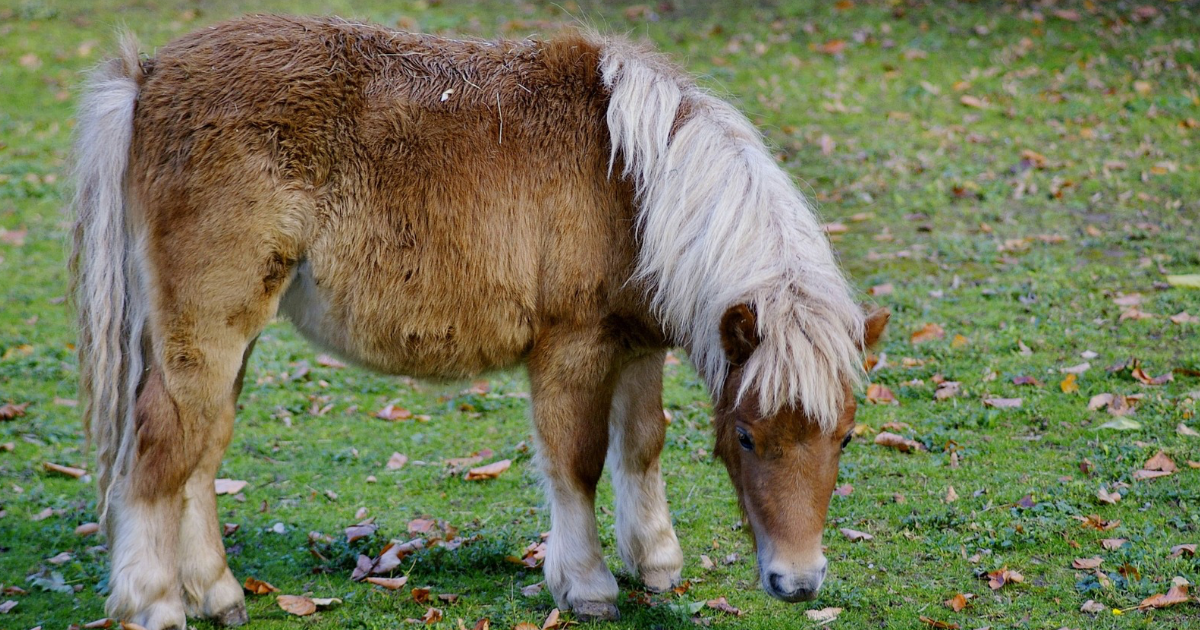
These gentle and friendly ponies are one of the smallest horse breeds, as well as the oldest. But as adorable as they are they have cheeky personalities which makes them even more lovable by those who meet them. Yet despite their small size Shetland ponies are incredibly strong and were used for tasks such as pulling carts and working in coal mines.
Origin
Shetland ponies come from the windy Shetland islands in Scotland and date back thousands of years. It is believed that Shetland ponies arrived at the end of the last ice age and over the years have evolved into the ponies we love and recognise today.
Shetland Pony Breed Overview
Height: 7 – 10.5 Hand (28 – 42 inches)
Weight: 400 – 450 pounds
Lifespan: 20 – 30 years
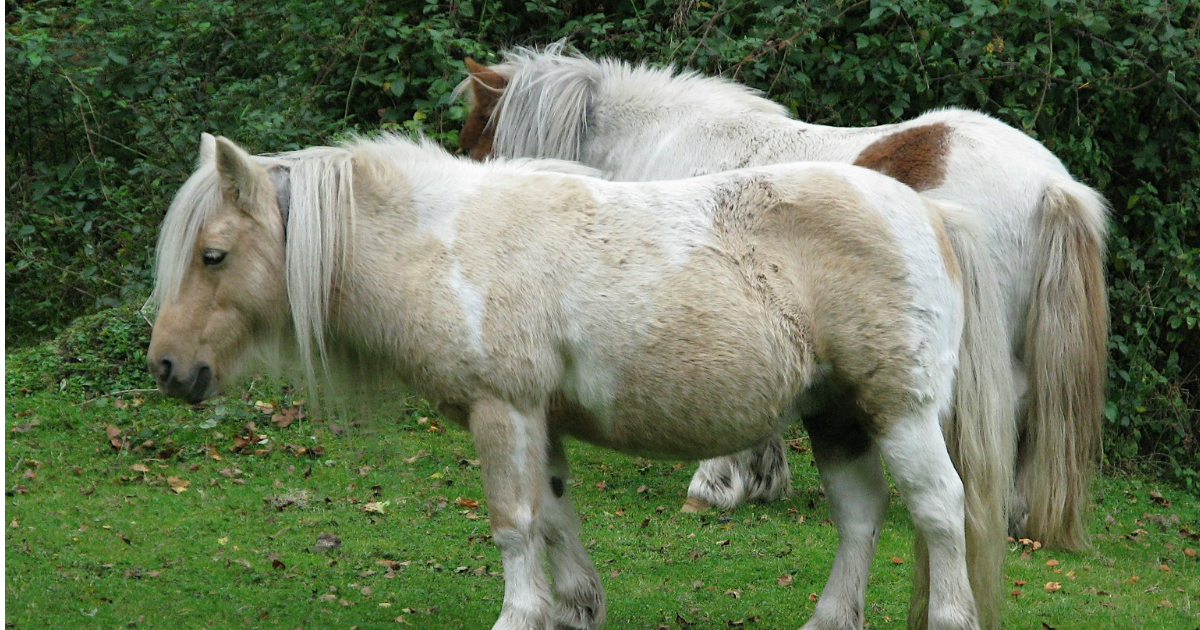
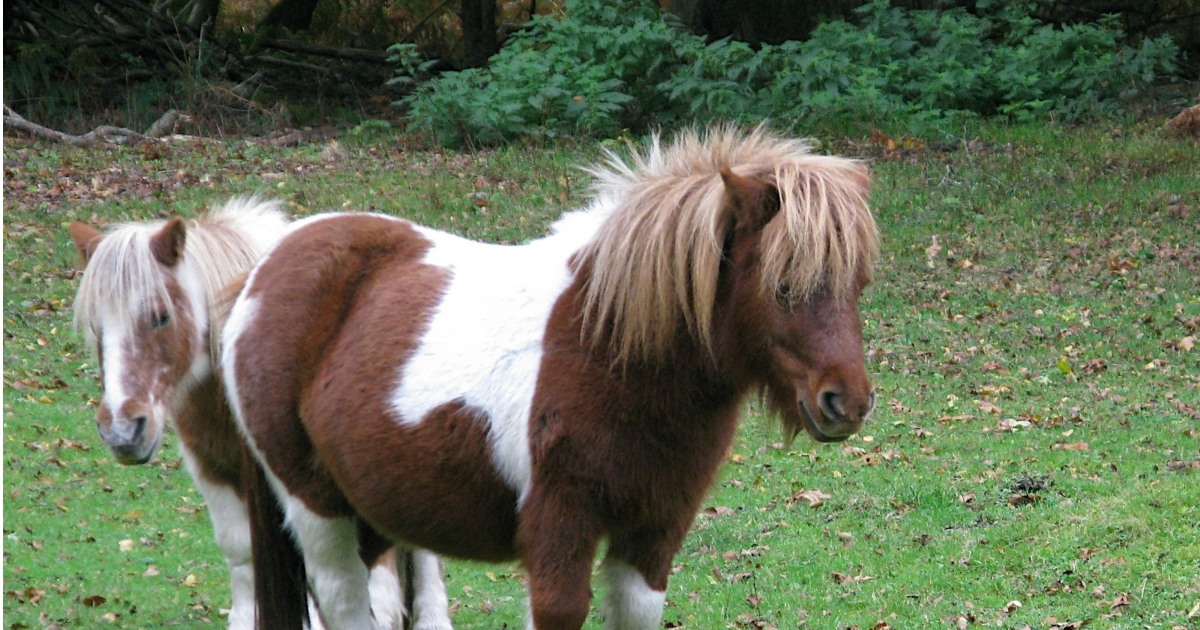
Colours: Shetland ponies come in a wide range of colours including black, chestnut, bay, grey, roan, piebald and skewbald but not spotted.
Shetland Pony Temperament
- Intelligent and quick learners, Shetland ponies can easily pick up good habits. But they can just as quickly learn how to be cunning and figure out things like how to open gates or escape from fields.
- Cheeky and Playful, Shetland ponies love to explore and can get a bit sassy if board. They can often be described as having a lot of attitude or a cheeky personality.
- Gentle and Friendly, Shetland ponies are generally affectionate, patient, trustworthy, gentle and friendly. Shetland ponies are gentle with children and great for young riders.
- Independent and tough, Because Shetland ponies grew up on the windy cold islands of Scotland, they developed a strong, self reliant attitude.
Shetland Pony Care
Shetland ponies are not challenging to care for and are known as easy keepers because of an efficient metabolism.
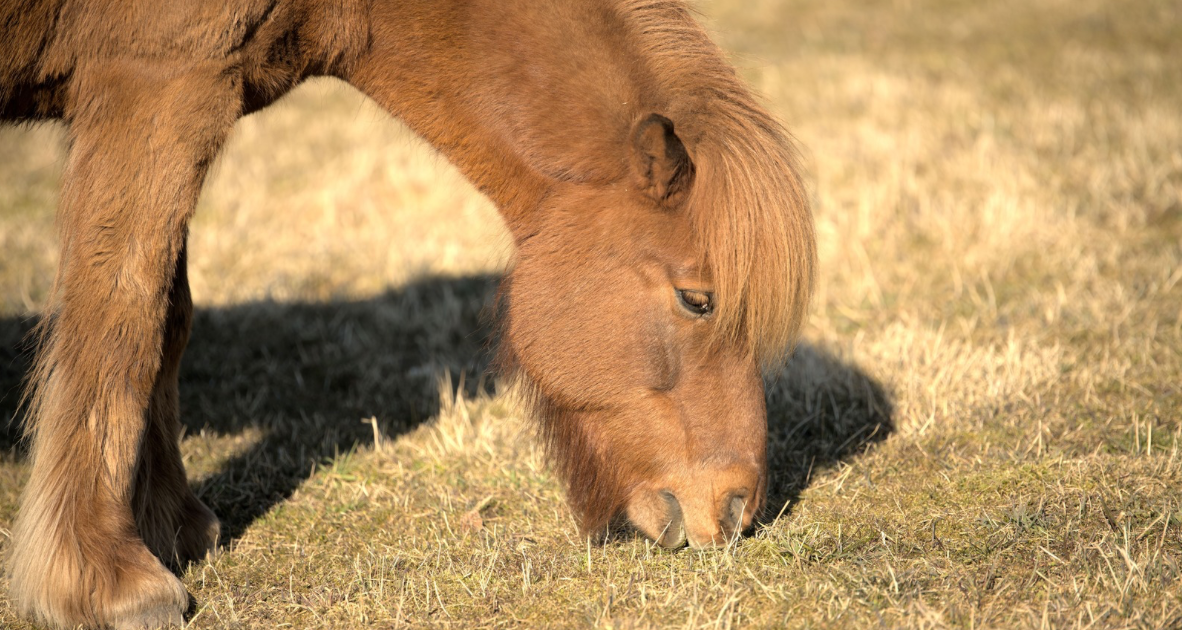
- Feed, What to feed a Shetland pony depends on the individual and creating a balanced diet with your veterinarian is very important. Shetland ponies are prone to obesity and can put weight on easily. So it is important to create a balanced diet. Forage and hay based diets that are high in fibre will be the majority of most Shetland ponies diet. Access to grass may need to be limited due to them putting on weight easily. The challenging part of a Shetland pony diet is usually keeping them on a calorie controlled diet. You can also provided them with a salt block and clean water.
- Equine Metabolic Syndrome, because Shetland ponies can gain weight easily that might make them prone to Equine Metabolic Syndrome (EMS) taking steps such as the right diet and exercise to prevent this disease is import and as it can lead to the risk of developing other health problems such as Laminitis. Symptoms can include difficulty losing weight, fat deposits on parts of the body including neck, ribs and tailhead.
- Grooming, Shetland ponies have a thick mane and tail and they also grow a double coat which enables them to survive harsh northern winters. So a regular grooming routine is importantly to keep their skin and coat, clean, smooth and healthy and to prevent skin problems and just like all horses and ponies they need frequent farrier care.
- Exercise, Shetland ponies can enjoy a wide range of activities and are great for children. Due to their small size they should only be ridden by children and not adults. You can hand walk them or try long reining, but when it comes to exercise and training Shetland ponies don’t have any special requirements.
Closing Thoughts
Shetland ponies may be small in size, but they have huge personalities and a fascinating history. Their strength, intelligence and friendly nature have made them much loved ponies around the world. Whether they are working, competing or simply being wonderful companions, Shetland ponies continue to capture the hearts of many people. These remarkable little ponies truly prove that great things can come in small packages.